Read the article
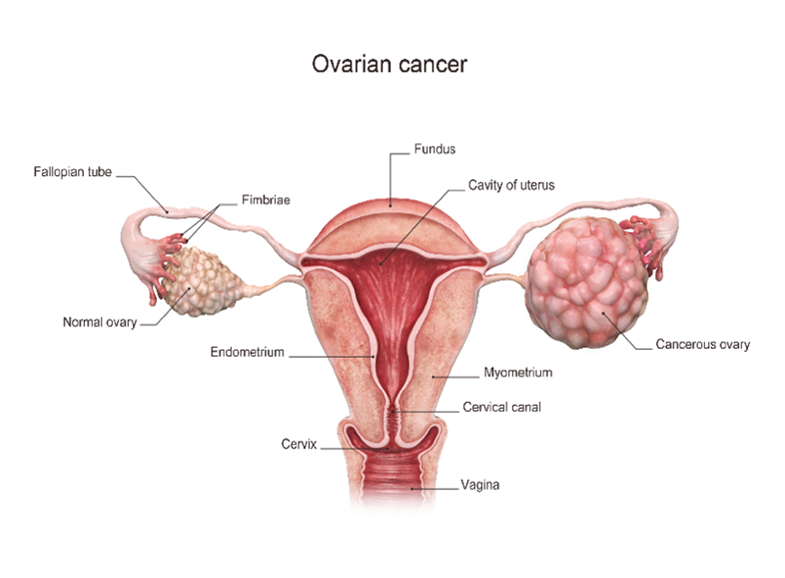
Ovarian cancer is the second most common type of cancer affecting the female reproductive system. Ovaries are important organs in the female body responsible for producing eggs and hormones like estrogen and progesterone.
EARLY SIGNS/SYMPTOMS AND RISK FACTORS
Recognizing the early signs of ovarian cancer is crucial. These may include abdominal pain, constipation, and a feeling of fullness or bloating in the abdomen.1
Several factors increase risk of developing ovarian cancer, such as age, genetics, the age at which menstruation began, and the age at which menopause occurs. Genetic factors, including carriers of the BRCA1 and BRCA2 genes, individuals with Lynch syndrome, and those with a first-degree relative affected by ovarian cancer, can contribute to this risk.2,3 These genes usually help your body fix mistakes when cells divide, but if there is a problem with these genes, it can increase the likelihood of certain types of cancer. Both BRCA and Lynch syndrome can run in families.2
So, if someone in your family has had cancer because of these gene changes, it is important to talk to your doctor. They can help you understand your own risk and what steps you can take to stay healthy.
SCREENING AND DETECTION GUIDELINES
- Although there are no clear screening guidelines for ovarian cancer, USPSTF—a group of health experts who review research to help doctors prevent illness and promote overall health—does not recommend using blood tests like CA-125 or transvaginal ultrasound for routine screening. These methods have not been proven to reliably detect ovarian cancer at an early stage.4
- A-125 is a blood test used by doctors to help detect certain types of cancer, especially ovarian cancer. However, it is important to know that CA-125 levels can also be high for reasons other than cancer.5
If someone has a family history of cancer or other risk factors,6 they might need genetic testing. This checks for changes in genes like BRCA1, BRCA2, and those linked to Lynch syndrome,2 which can raise risk of certain cancers, including ovarian cancer.3 Testing can help you better understand your risk and plan proactive steps to stay healthy.
If you are unsure about whether you should get screened for ovarian cancer or have any questions, it is a good idea to talk to your osteopathic family physician. They can provide more information and help you figure out what is best for you. It is also important to see your OBGYN yearly for routine checkups and pelvic exams to monitor your overall reproductive health.3
TREATMENTS
If ovarian cancer is diagnosed, treatment often involves surgery to see how much the cancer has spread.7 This may include removing the tumor, ovaries, or uterus. Chemotherapy may also be part of the plan. Your health care provider will discuss the best approach for your specific situation. Staying informed and working with your health care team are key steps in protecting your health. If you have questions, do not hesitate to reach out to your doctor.
SOURCES
American Cancer Society. Signs and symptoms of ovarian cancer. Accessed November 20, 2024. https://www.cancer.org/cancer/types/ovarian-cancer/detection-diagnosis-staging.html
American College of Obstetricians and Gynecologists (ACOG). Early detection of epithelial ovarian cancer: updated guidelines. Committee Opinion No. 891. June 2022. Accessed November 20, 2024. https://www.acog.org/womens-health/faqs/ovarian-cancer
Rosenthal AN, Fraser L, Manchanda R, et al. Results of the UK Collaborative Trial of Ovarian Cancer Screening (UKCTOCS): long-term follow-up. Lancet, 2021;397(10287):2181-2192. doi: 10.1016/S0140-6736(21)01263-3
US Preventive Services Task Force. Screening for ovarian cancer: US Preventive Services Task Force Recommendation Statement. JAMA. 2018;319(6):588-594. doi: 10.1001/jama.2017.21926
Kurman RJ, Visvanathan K, Roden R, et al. Advances in biomarker-based ovarian cancer screening. Am J Obstet Gynecol. 2023;229(4):351.e1-351.e10. doi: 10.1016/j.ajog.2023.07.002
Menon U, Ryan A, Kalsi JK, et al. Risk algorithm for ovarian cancer in high-risk populations: a prospective study. J Clin Oncol. 2023;41(8):1500-1510. doi: 10.1200/JCO.2022.23.00478
Jacobs IJ, Menon U, Ryan A, et al. Multimodal approach to ovarian cancer screening: long-term follow-up. Lancet. 2021;397(10290):2182-2193. doi: 10.1016/S0140-6736(20)32714-6