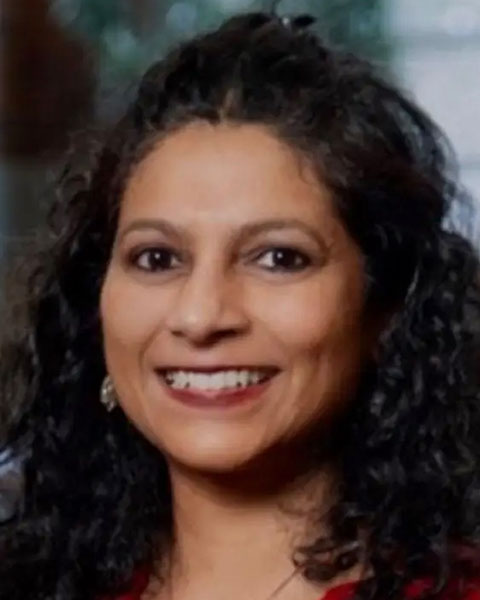
 Nalini Velayudhan, DO
Before joining the Faith in Practice Team 899 Santoro/Johnson, my motivation to help others was rooted in my upbringing in India, where prioritizing the needs of others was exemplified by my family. At age five, we moved to Yemen for my father’s work as a civil engineer, enabling him to better financially support family at home. During this time, we had the golden opportunity to meet Mother Teresa and participate in community efforts to aid an orphanage run by her Sisters of Charity in Sana. Years later, as college students my sister and I volunteered at a Sisters of Charity orphanage a world away in Tijuana, Mexico. Meeting Mother Teresa and embracing her philosophy, “hands that help are holier than lips that pray,” has guided me throughout my medical training and career. A photograph of my family with Mother Teresa snapped during one of these meetings graces my desk as a reminder to align with my core values of service and love, especially in the pursuit and practice of medicine.
Learning about Faith in Practice’s mission to provide healthcare to thousands of individuals in dire need throughout Guatemala inspired me to be a part of this organization creating positive change one patient, one clinic, one village at a time. The healthcare system in the US, broken as it may be still manages to provide some of the best care in the world in contrast to the healthcare system in Guatemala, which is not only broken but also lacking in basic medical supplies, medicines, expertise, access, and affordability. The sheer poverty faced by the Guatemalan people further limits their ability to get good healthcare. According to the 2023 World Bank report, 56% of the total population of roughly 18 million Guatemalans lived under the poverty line. The data indicates that although absolute extreme poverty is low, many people remain under the national poverty line, and multidimensional poverty persists as a concern. Further, even individuals in the middle class cannot afford the diagnostic tests or treatments recommended by their physicians. This is where Faith in Practice has been filling the need for over three decades. With medical and surgical teams on the ground 48 weeks (about 11 months) out of the year, Faith in Practice volunteers care for about 17,000 individuals.
The 899 Santoro/Johnson team that I was fortunate to be a part of is one of the many medical teams working in remote areas throughout Guatemala providing care to those who have no access or extremely limited access to healthcare. Each week the medical clinics attend to, on average, 1,000 patients over a four-day period. The local volunteers identify patients needing care, team up with local authorities to secure clinic sites often set up in schools or community centers, and work with community members to organize and manage patient flow during the clinic days.
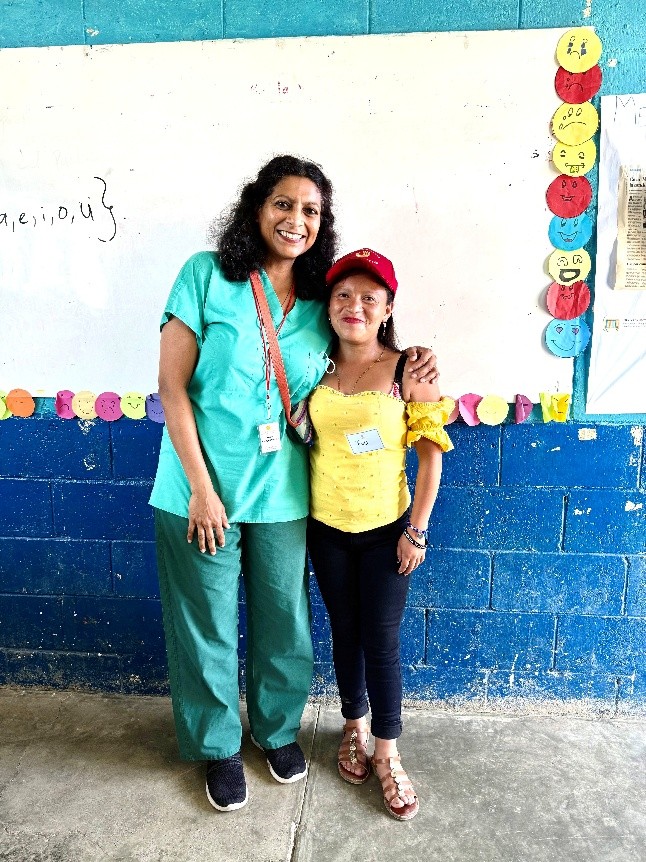
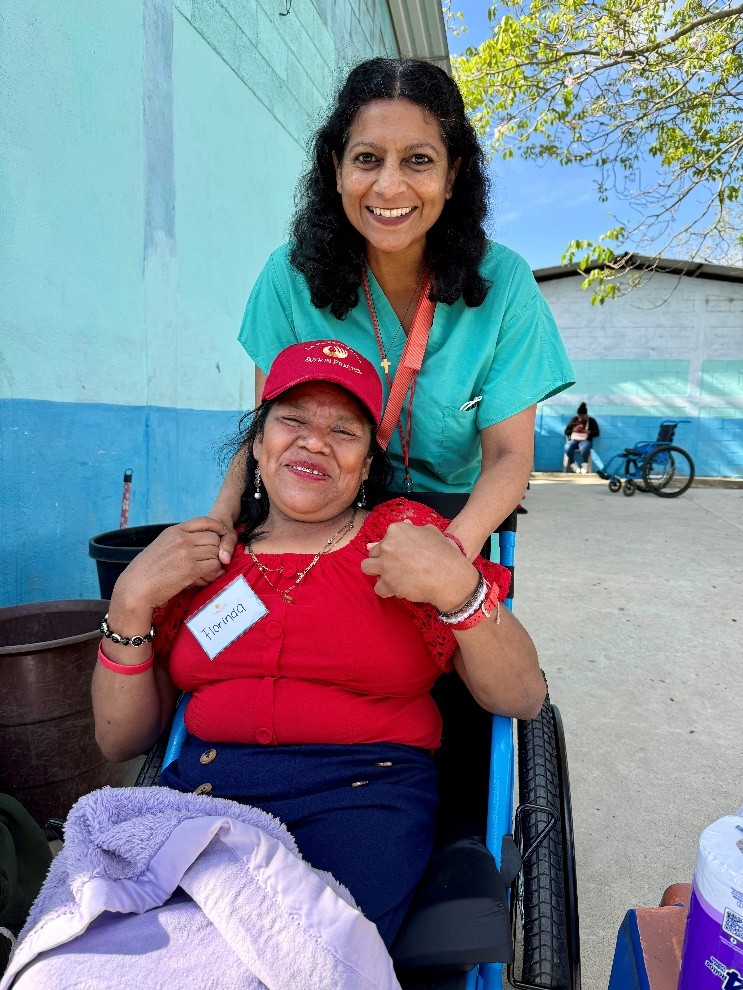
These local volunteers during our mission in San Pedro Pinula, Jalapa, were comprised of teachers, mothers, and fathers from the local community we served. Many of them graciously slept on mattresses on the classroom floor to keep our equipment safe and to be close to the school so they could help close and start the clinic operations daily. One such charming volunteer was Florinda, who the year before had visited a Faith in Practice medical clinic in need of a wheelchair. Having obtained her mobility and independence, she returned this year as a volunteer. She served every day as an attendant who shared a smile and kept the hand sanitizer, soap, hand towels, and toilet paper in order. Eva was another volunteer who patiently guided individuals from one station to the next as they completed their general medical visit or radiology or pharmacy visit in succession until they were discharged. These local volunteers together shone as the soul of the medical mission, embodying compassion, selfless service, humility, and stepping up as leaders to serve their community.
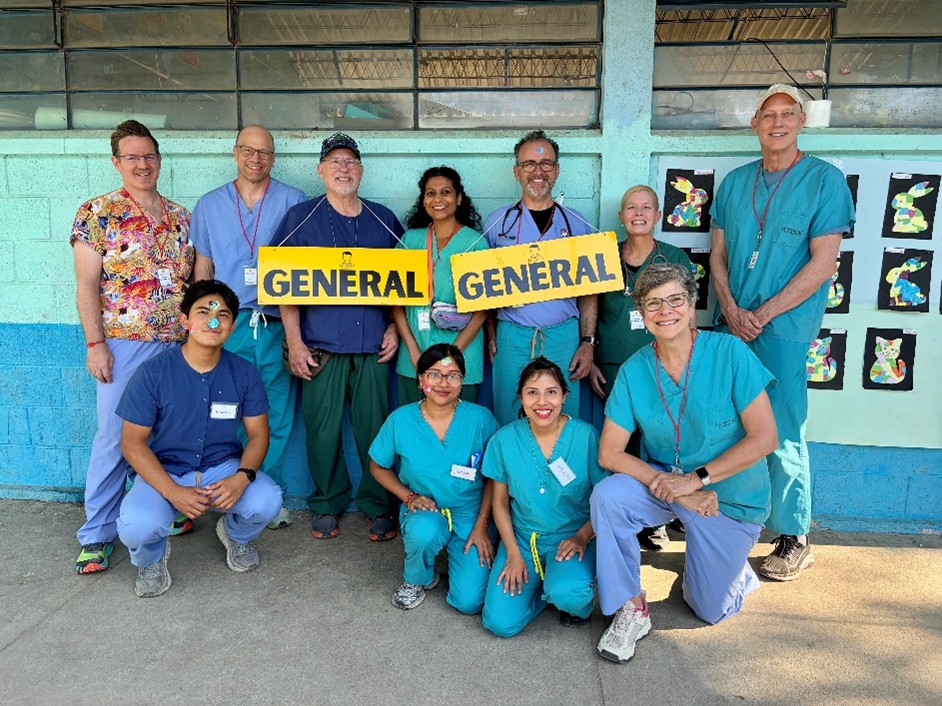
Our medical team from the US was comprised of physicians across family medicine, internal medicine, emergency medicine, gastroenterology, gynecology, pediatrics, radiology, and physical therapy. In addition, our team was enhanced by a nurse practitioner, a physician assistant, nurses, pharmacists, techs, interpreters, and non-medical volunteers who chose to use their talents to help assemble wheelchairs or write blog posts or take photographs to document our experience. Some on our team, like my husband and I, were on our first medical mission, while some were veterans on their twenty-seventh mission with Faith in Practice. This group of dedicated individuals were the beating heart of the medical mission, seeking out this opportunity to serve abroad with a desire to alleviate suffering and use their expertise to bring healthcare to those in need.
The patients had access to not just a committed team of physicians and healthcare providers but also to medications from our pharmacy and blood and urine tests from the laboratory. Because we had a radiologist on our team, patients also had ultrasound, and x-ray services available to them. Of great importance was the ability for the medical providers to refer patients for surgery by identifying those who needed operations. For instance, I had two patients needing inguinal hernia repairs, one young woman needing cleft palate correction, one man needing anal-rectal fistulas repaired, and one woman needed a breast lump evaluated. I was able to utilize the expertise of the referral team to schedule them to one of Faith in Practice’s surgical teams in Antigua or San Felipe for further management. The referral team could also connect patients to specialists locally. For example, I referred some patients to a local gastroenterologist for a colonoscopy.
Our clinic site was in San Pedro Pinula in Jalapa department, a small municipality located in eastern Guatemala. The local inhabitants refer to the area fondly as “La Tierra del Pino” or land of the pine, in honor of the pine forests, rolling hills, gentle breezes on balmy days, and mesmerizing sunsets. The people we saw in clinic were mostly engaged in manual work like farming, construction, and housekeeping. Many struggled with chronic conditions that we in family medicine are used to managing, such as hypertension, headaches, joint pain, diabetes, heartburn, and dyspepsia. With access to a basic but diverse range of medications in our formulary, we were able to provide medications for 3 to 6 months to help rein in the high blood pressure or elevated blood sugar levels or ease the chronic joint or muscle pain. We were also able to connect some people to local physicians for follow-up care.
Then there were some rare cases my colleagues saw, like a teenager with osteogenesis imperfecta presenting with multiple poorly healed fractures making his bones wavy. Or the youngster with spina bifida that in the US would have been treatable at a much younger age. Many times, during my week serving these kind, resilient, steadfast individuals, I paused to contemplate the impact we were having on them. As one colleague said, we are not causing more harm and at the very least we are bringing some relief and benefit to their overall health.
Perhaps what I enjoyed and appreciated the most about working on team 899 Santoro/Johnson was the collaboration amongst colleagues across different specialties, the release of hierarchy often a barrier between specialists and the singular goal we all worked toward, the well-being of the patient. The entire team had a sense of shared purpose and though the days in clinic were long and busy, as the evening sun set, our spirits soared high with gratitude, fulfillment, and joy for the privilege of using our skills to ease the suffering of others. The camaraderie fostered amongst the team members lit up our days and made light the burden of early rising, cold showers, the daily commute down narrow roads, and the rooster who decided to ring out his rooster call like an unwelcome alarm at 1:00 or 2:00 or 3:00 AM, making sleep broken and unrestful.
As the week in Guatemala wound down, we had the opportunity to tour a hospital in Antigua where the surgical team for Faith in Practice operates. In one of the rooms, a grand stained glass panel depicted Mother Teresa in the classic white saree with a blue border. As I looked up at the sunlight shimmering through this painted window, my eyes met her glassy gaze and I remembered her words, “it is not how much we do but how much love we put into it.” I hope I was able to share the love that Mother Teresa valued so greatly, not only by caring for my patients but also by fostering meaningful new connections within our team in a foreign place, where we arrived as strangers and departed as friends.
Now reintegrating back into life in the US, as I reflect on the time in Guatemala, I hope that shared smiles brought many of us together even in times of suffering. That holding hands during struggles offered a touch of healing to the one holding and the one being held. That those gentle glances amid moments of despair provided ease and comfort. That in moments of turmoil, being listened to allowed us to reclaim our sense of wholeness. I hope that through the lens of curiosity and awe, we can realize we are never truly alone—we have always belonged to one another. May we remember that our shared humanity unites us all.
Faith in Practice
I left the warmth of Jalapa
But the smiling eyes followed me
Across borders into my
Cool daydreams.
The sundrenched faces holding stories
Of crooked aches, salty tears, gnawing pain
Gratefully accepting our care.
We hold their insurmountable suffering
And unyielding struggle graciously
Between our palms as we humbly
Accept limitations in our own caregiving.
To hold the Guatemalan grandma’s
Soft, fragile hands in my own
Is to hold my grandmother’s soft brown
Aching arthritic hands one more time.
In her joyful, toothless smile I see
My Nani’s toothless echo of a smile
Beaming through and I can’t help
But wonder and smile along with her.
-Nalini Velayudhan
Resources: https://www.faithinpractice.org/